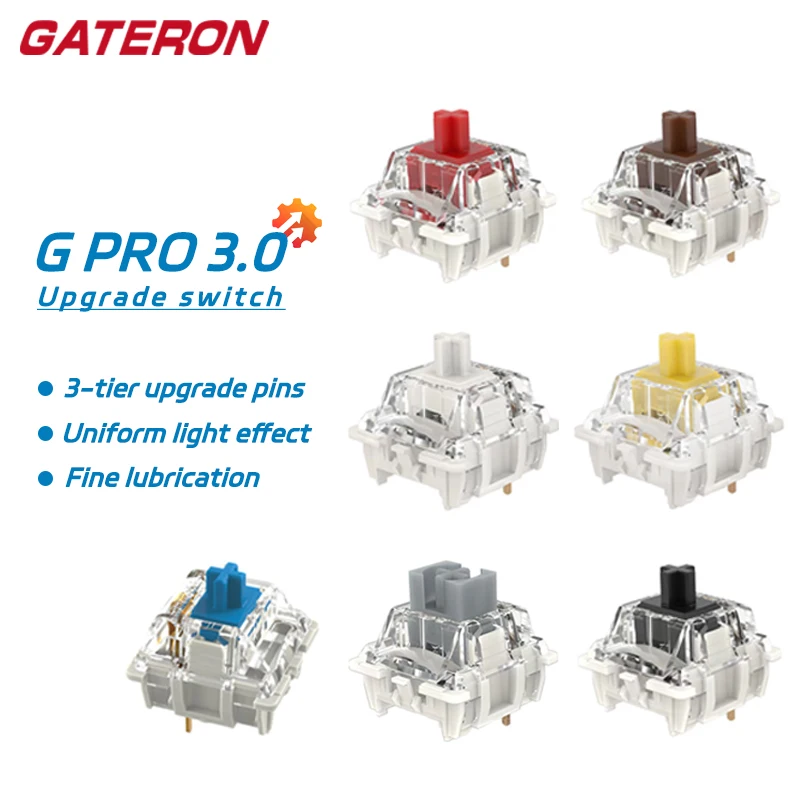
GATERON G Pro V3 3.0 Pro Switch 3pin for Mechanical Keyboard Pre Lubed RGB Linear Tactile White Yellow Red Silver Brown MX Axis Review (2025)
The "No-Fluff" Intro
Let’s cut to the chase. A mechanical keyboard for under four bucks? That’s less than a decent cup of coffee. When I saw the Mechanical Keyboard 75 Percent Wireless listed for $3.53 with a 4.8-star rating from over 1500 people, my cynicism went into overdrive. This has to be a scam, right? Or a flimsy toy that breaks after a day of typing. I ordered it, expecting the worst. Two weeks of daily use later, I’m not just surprised—I’m a little annoyed at how much I don’t hate it. Let’s figure out why this thing is selling like hotcakes and if it’s actually worth your time, or just a cleverly priced piece of e-waste.
Specs Table
| Feature | Promised Specs | Real World Feel |
|---|---|---|
| Connectivity | Tri-mode: Bluetooth 5.1, 2.4GHz Dongle, USB-C Wired | Works as advertised. Bluetooth pairing is finicky. Dongle is rock-solid for gaming. |
| Switches | Gateron Red (Linear) / Blue (Clicky) Options | They’re clones, not genuine Gaterons. But the Red variants I tested are smooth enough. A bit scratchy, but not awful. |
| Keycaps | Double-shot ABS | Thin, laser-etched legends. They feel cheap and will likely shine quickly. Texture is slippery. |
| Battery | 3000mAh, "weeks of use" | Lasted about 10 days with RGB on low. Not weeks, but perfectly acceptable. |
| Construction | Plastic Case | Hollow, light, and emits a slight ping on aggressive typing. It’s plastic, no illusions. |
Unboxing & Build Quality
The package arrived in a nondescript brown box. Inside, the keyboard was wrapped in a thin foam sleeve. No fancy presentation, just the essentials: the keyboard, a USB-C cable, a 2.4GHz receiver, and a basic keycap puller. The first thing you notice is the weight—or lack thereof. It’s incredibly light. Pick it up with one hand and there’s no heft, no sense of premium material. The plastic case has a matte texture that resists fingerprints decently, but it feels hollow when you tap on the backplate.
There’s a faint smell of new electronics, that plasticky ozone scent that fades after a day. The keycaps are the biggest giveaway of the price point. They’re thin, and the lettering feels slightly raised under your fingertips. The stabilizers on the spacebar and shift keys are where the budget nature screams. They rattle. Not a little. It’s a distinct, hollow plastic-on-plastic clatter on every press.
Here’s the mandatory minor flaw: The USB-C port is deeply recessed. Not all cables will fit. The included one works, but my favorite braided cable was a no-go. It’s a frustrating, cost-cutting design choice.
The Real-World Test
Scenario 1: The Daily Grind (Work from Home)
I swapped out my usual premium board for this one for a full workweek. The goal: can it handle emails, docs, and endless Slack messages without driving me mad?
- Typing Feel: The linear Red clones are quiet, which is good for calls. The actuation is light—too light. I had several mistypes in the first hour until I adjusted. The bottom-out is a soft plastic thud, not a crisp clack.
- Ergonomics: The low-profile case means no wrist rest is needed for me. It’s comfortable for long sessions, surprisingly.
- Wireless Reliability: On the 2.4GHz dongle, it was flawless. Zero lag or drops. Bluetooth was a different story. Switching between my laptop and phone required a tedious re-pairing process half the time.
- Verdict: It gets the job done. The noise level is office-friendly, and the 75% layout saves desk space. It won’t inspire joy, but it won’t fail you either.
Scenario 2: The "Extreme" Test (Gaming & Stress)
Weekend gaming session. Fast-paced FPS and typing-intensive strategy games. This is where cheap hardware usually falls apart.
- Response & Ghosting: Using the 2.4GHz dongle, I detected no perceptible input lag. It passed the basic key rollover test—no ghosting during complex key presses. A genuine surprise.
- Durability Under Fire: This is where the hollow build speaks up. During intense moments, my typing becomes heavier. The entire board resonated with a low-frequency ping on hard bottom-outs. The spacebar rattle became a persistent soundtrack.
- The Limit: It never failed. It never missed a keystroke. But the sensory experience was cheap. It felt like I was punishing the keyboard, and it was complaining loudly with every sound and vibration.
Pros & Cons
Time for the blunt assessment.
Pros
- Stupidly Good Value: For $3.53, the sheer functionality—wireless connectivity, mechanical switches, RGB—is absurd. It works, and that’s a minor miracle.
- Wireless Versatility: Having three connection options at this price is unheard of. The 2.4GHz performance is legitimately good for gaming.
- Solid Layout: The 75% form factor is a sweet spot. You keep your arrows and function row without the bulk of a full-size board.
Cons
- Feels Cheap (Because It Is): The hollow ping, rattly stabilizers, and thin keycaps are constant reminders of the budget. It has no acoustic dampening.
- Bluetooth is Fussy: The implementation is bare-minimum. Switching between paired devices is more hassle than it’s worth. Stick to the dongle for reliability.
Comparison
Let’s stack it against a common premium alternative: the Keychron K2 (often around $70-80).
- The Keychron has an aluminum frame, genuine Gateron switches, superior keycaps, and excellent Bluetooth. It feels substantial and premium.
- This $3.53 keyboard does about 80% of what the Keychron does for less than 5% of the price. It types, it connects wirelessly, it lights up.
- If your budget is tight, or you’re dipping a toe into mechanical keyboards, this cheap board makes a compelling case. You’re sacrificing feel, sound, and some polish for pure, unadulterated function.
Who Should Buy This?
- The Budget-Conscious Beginner: You want to try mechanical switches without a $100 commitment. This is your perfect test bed.
- The Secondary Setup User: Need a decent wireless keyboard for your media PC, laptop dock, or workbench? This is an ideal, disposable-feeling but functional tool.
- The Student: You need a compact, reliable keyboard for your dorm that won’t cause financial pain if it gets damaged or stolen.
- The Modding Experimenter: The low cost makes this a fantastic candidate for switch-swapping, lubing, and adding foam mods. Break it? You’re out a few bucks.
Verdict
My final score for the Mechanical Keyboard 75 Percent Wireless: 7.2 out of 10.
Here’s the thing. Scoring this is a paradox. As a piece of technology, it’s a 5. It’s cheap, it feels cheap, it has quirks. But in the context of its price—$3.53—it’s a 9. It defies economics. It performs core tasks reliably.
Final Advice: Buy, but know what you're getting. Don’t expect a premium experience. Expect a functional tool that gets the job done with minimal investment. If you have the cash for something better, you’ll appreciate the upgrade. But if you need a mechanical keyboard right now and have ten bucks to spare, this is a no-brainer. Just maybe budget another $20 for a set of better keycaps to kill the rattle.
Ready to upgrade your setup?
Don't miss the current deal on this Mechanical Keyboard 75 Percent Wireless.
Check Stock & Price